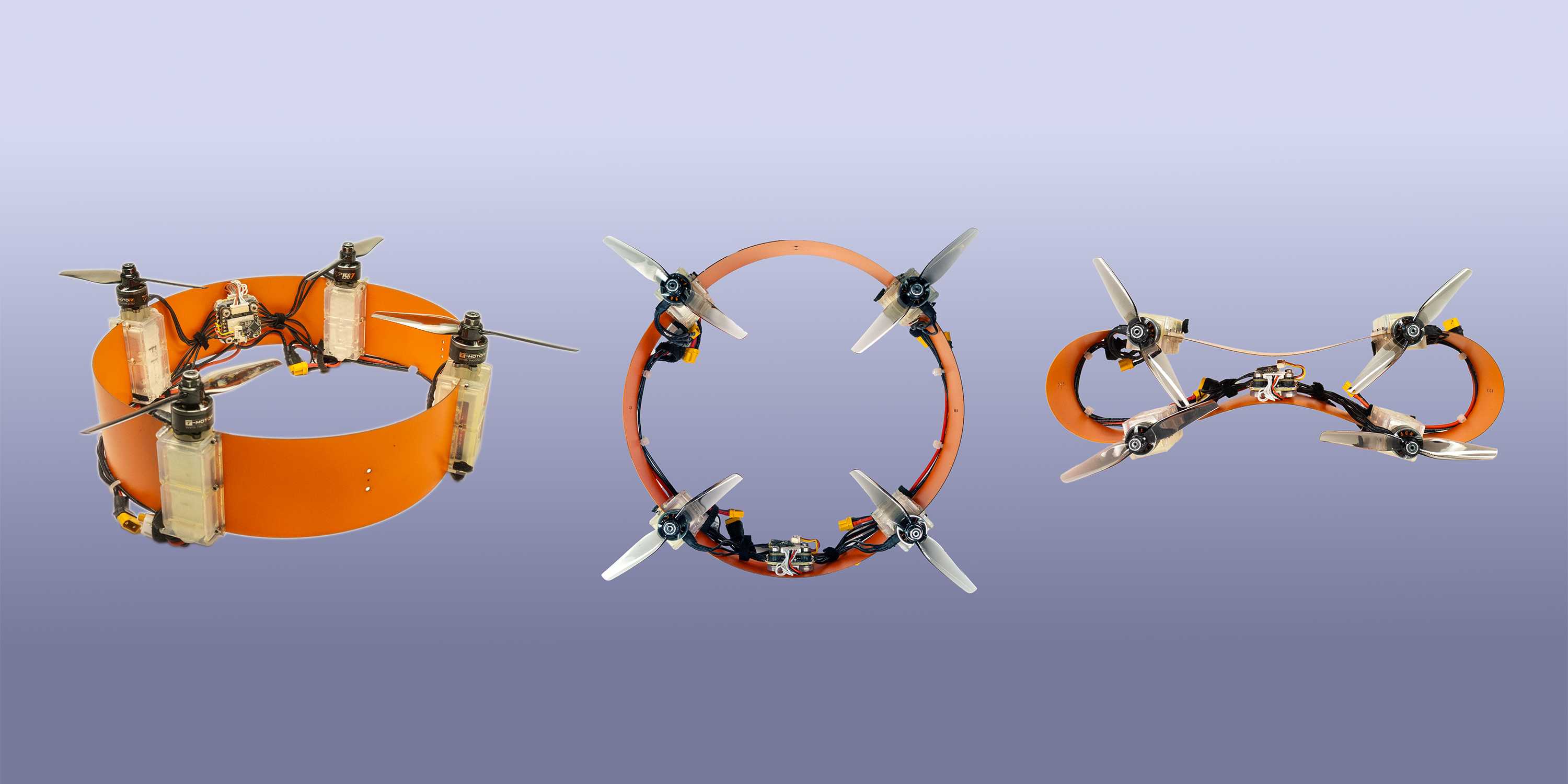
ETH Zurich has detailed a research quadcopter that can bend on impact and stay airborne. In its November 3 report, the university said researchers flew the FlexiQuad into obstacles at speeds of up to about 25 km/h. The prototype’s ring-shaped frame deformed briefly, absorbing some of the impact before the aircraft continued flying.
How the frame works
FlexiQuad carries its four motors, batteries and flight electronics around an open ring. The frame bends more readily sideways than vertically. That gives it room to yield when it hits an obstacle while providing the stiffness the motors need to support the aircraft in flight.
ETH Zurich reports a top flight speed of up to 80 km/h. The collision tests took place at substantially lower speeds. Researchers Luca Girardi and Stefano Mintchev have filed a patent application for the structural design.
Why it matters to drone pilots
A minor bump can turn a tight indoor flight into a recovery job, especially if the aircraft falls somewhere a pilot cannot reach. A frame that helps the drone remain airborne could make it easier to back out and land after contact. That could be especially valuable for inspection crews working inside a ship’s ballast tank or rescue teams exploring damaged buildings. ETH Zurich identifies those as possible applications.
Keeping the drone in the air is only part of the problem. The ring can wobble after a hit, blurring camera images just when the drone needs to work out where it is. ETH Zurich says the researchers used reinforcement learning to help the drone stabilize using onboard motion sensors before resuming autonomous flight. Reliable navigation outside the lab remains a research goal.